
People step outside today knowing the day may stretch on without a clear reason. A man opens the door slowly, looks right and left, then walks on. A woman pauses for a moment before moving, adjusts what she carries, and chooses her path. A young man leaves without a precise destination; he only knows he will remain close to people, far from attracting attention.
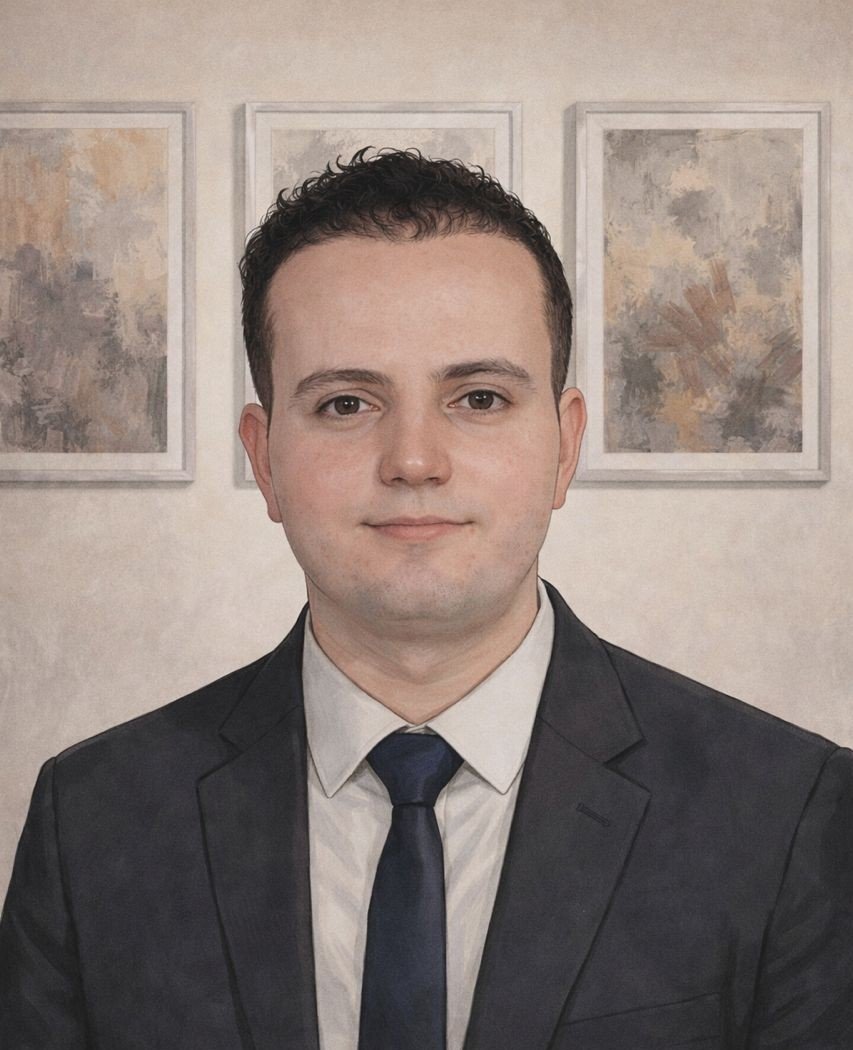
The painting by the artist: Saad al Shehabi, Visual Content Editor.
Do not trouble anyone..
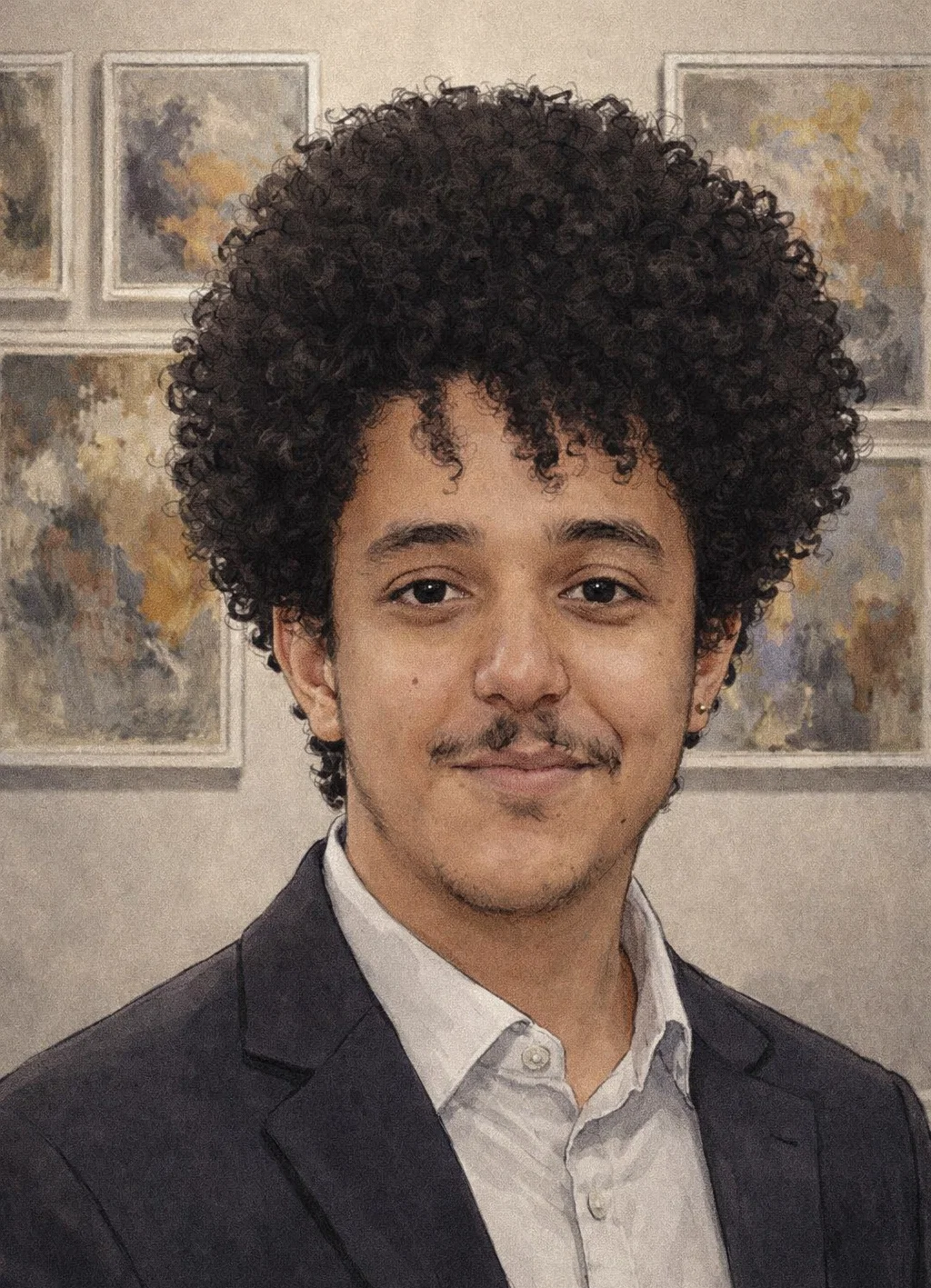
— Mohammed Ismail al Amrani
People step outside today knowing the day may stretch on without a clear reason. A man opens the door slowly, looks right and left, then walks on. A woman pauses for a moment before moving, adjusts what she carries, and chooses her path. A young man leaves without a precise destination; he only knows he will remain close to people, far from attracting attention.
Movement is minimal, because danger does not favor noise. Steps are short. Standing lasts longer than walking. Everyone measures the distance between themselves and others. Excessive closeness may be understood as an assault on the homeland. Thus, movement is governed by an unspoken, collective caution.
Within this caution, a new form of coexistence may have taken shape—one founded on fear. Someone changes direction to avoid friction. Another delays crossing for a few extra minutes. Because peace has become a practical priority. People are searching for a day that passes without harm.
Speech is reduced to the bare minimum. Questions are shortened. Answers are compressed. No casual jokes, no curiosity. Every word is calculated, because any excess may weigh down the atmosphere. This silence is a form of mutual protection.
A young man deletes numbers from his phone because they are too many. A woman hides a piece of paper in her bag, then rearranges it once again, simply to make sure it will not appear during a sudden opening.
Fear reshapes movement. People walk along longer routes because they are less visible. The nearer street is ruled out because it is exposed.
In conversation, the style shifts. No full names, no specific places, no exact appointments. Sentences are deliberately left incomplete. Those who understand, understand. Those who do not, are not asked. This deliberate absence has become a language.
Laughter is swallowed halfway through, because any excess is counted. In this city, another kind of coexistence takes form. People do not draw close, yet they conspire to remain. No one helps another openly, but they do not implicate one another. Each person is careful not to become the cause of a question, a suspicion, or an unnecessary stop. This mutual caution creates a fragile balance, yet it stands. Peace here is merely the reduction of losses: fewer words, calmer colors, narrower paths, lighter memory. When this choice succeeds, the day passes without a trace, making living possible.
Here in my city, Sana’a, those who are late are not rushed. Those who hurry slow themselves down instinctively. The general rhythm is imposed from within, from a shared sense that any excessive friction could turn into a problem no one is prepared for. Here, peace is a survival skill.
Within this context, relationships are managed with the least possible interaction. No introductions, no arguments, no curiosity. Each person settles for what guarantees safe passage. This restraint is an economy of energy. Everyone is exhausted, and everyone knows that exhaustion cannot withstand a new confrontation.
Coexistence takes shape in this unspoken collective decision: we will not add a burden to the day. No questions, no comments, no public corrections. Whoever makes a mistake is left to continue on their way. Whoever hesitates is given extra time. This limited leniency creates a fragile balance, yet an effective one.
On days when reasons for ignition pile up, reducing harm becomes an achievement. Peace becomes the ability to pass through without leaving a problem behind, and without dragging others into a confrontation they do not want.
Within this strict economy, the idea of dignity is reshaped. It is not found in a raised voice, nor in a rigid stance, but in the ability to pass through without humiliation and without provocation. Each person protects themselves through a precise calculation of their presence in public space.
Others are not enemies, but they are not witnesses either. The relationship between them is managed according to the principle of safe distance: closeness sufficient to proceed, and distance enough to prevent friction. This delicate balance keeps the day intact and keeps the fire at its minimum.
Peace is practiced as restraint—restraint from excess, from curiosity, from challenge. Coexistence requires no more than this mutual restraint. When everyone adheres to it, movement continues without eruption.
Along the way, speed shifts more than once. A rhythm slows at known points, then returns to its minimum acceptable level. This fluctuation has become familiar, and people have learned how to move within a margin that allows them to arrive without drawing attention.
In this movement, the idea of precedence disappears. No one tries to be first. What matters is remaining within the current, not outside it. This awareness makes movement more disciplined and more capable of enduring.
The road stretches, but tension does not increase. On the contrary, the expansion eases the strain. Walking provides extra time for thought without turning into anxiety. Each step moves the person away from a previous point and closer to a wider space, even if it has not yet been named.
The load lightens with every step, because people shed what is unnecessary. The step becomes lighter, the shoulder straightens slightly, and the breath regulates without visible effort. Movement here seeks a minimum that allows continuation.
A collective inclination toward self-discipline becomes apparent. No guidance is needed, no public correction is required. Each person restrains themselves enough out of fear of the security forces.
Approaching a livelier area does not suddenly change behavior. On the contrary, caution increases. People know that transitioning from calm to activity carries its own risks. Therefore, movement is managed with greater care, and everyone implicitly agrees that liveliness should not turn into chaos.
Density increases without turning into a rush. Bodies are closer together, and the rhythm demands greater attention. Those accustomed to the wider space readjust their movement. No one imposes their path, but each person protects their line with calculated precision.
Desires intersect. Some want to pass, some want to stop, some seek a brief refuge from the day. Despite this variance, movement continues. No shouting, no protests, no attempts to assert priority.
Attention shifts from the self to the surroundings. Each person reads the path with their eyes before their steps follow. This practical awareness stems from understanding that any small mistake can escalate quickly. Therefore, safe movements are chosen, even if slower.
Coexistence at this stage requires no rhetoric or slogans. It is enough for everyone to pass without excluding anyone. When this happens, the path continues, and the door remains open for the next step within the same street.
The way of walking changes. The step is no longer just for passing, but for coexisting with others in the same path. Bodies move in parallel rather than intersecting. Each individual maintains their personal space without isolating themselves from the general flow.
A new caution emerges: not to seize the space. Those who slow down leave room, and those who stop do so at the edge. No one monopolizes the path, nor acts like the owner of the place. This behavior is understood immediately upon entering.
Stopping here is temporary by nature. The body knows it is a guest. The gaze does not linger, and movement resumes before it becomes a burden. Even the desire to sit or stay is regulated within limits that do not pressure others.
Momentary relationships form and dissolve. A brief approach, a calm distance, continuation without leaving a trace. No introductions, no breakups. This pattern allows everyone to remain without feeling excluded or dominated. The space accommodates this exchange because it is built on practical respect, not emotional.
Within this context, peace becomes the ability to participate without taking over. To be present without crowding, and to step back without disappearing. This delicate balance is what gives the street its energy, without turning it into a battleground.
Movement reaches its maximum without running wild. Bodies are close enough to sense one another, and far enough to avoid collision. The desire to advance, to stop, to glance around—all are present, yet restrained.
The rhythm here demands greater focus. Any haste disrupts the chain, and any excessive slowing creates pressure behind it. Therefore, movement is measured with precise intuition. A step forward, half a step to the side, then a new alignment.
At this stage, individuality almost disappears. No one moves entirely alone, nor does anyone completely merge with the group. The balance between the two prevents chaos. Each person knows that their presence is influential, even if it seems small; thus, this presence is managed with caution.
Peace at this peak is the result of a long series of small decisions made by people without coordination, yet all directed along the same path. With every successful decision, it is proven that shared living is possible, even at the most crowded points.
Movement stabilizes at a level that allows persistence. No more rushing, no more retreating. Steps become temporary positioning, and the body finds its place without claiming it. Those who arrive do not celebrate, and those who pass are not interrupted. Everything stabilizes because authority has decided to stop at this point.
Proximity here is complete. Differences are present but not tense. The rhythm requires no constant adjustment, as if it has taught itself. Those who enter pick up the pattern immediately, and those who leave do so without leaving an awkward gap. Movement closes its circle quietly.
Presence becomes lighter. No need for proof, no desire to leave a mark. Each person settles for what ensures a normal moment in an abnormal day. This normalcy is costly because it results from a long commitment to avoiding harm, avoiding provocation.
For this reason, when Mohammed Ismail al Amrani was asked about the path, he did not open the gates of heaven, but closed the door of harm. He said just enough to be lived by. In a country stacked with reasons for hatred, restraint became an act, and leaving space for others became a form of shared survival.
“Do not trouble anyone” — a simple limit, yet enough to make the day possible: do not burden others beyond what they can bear, do not turn your presence into a weight. In the torn city, amid the mutual fire and hidden fear.