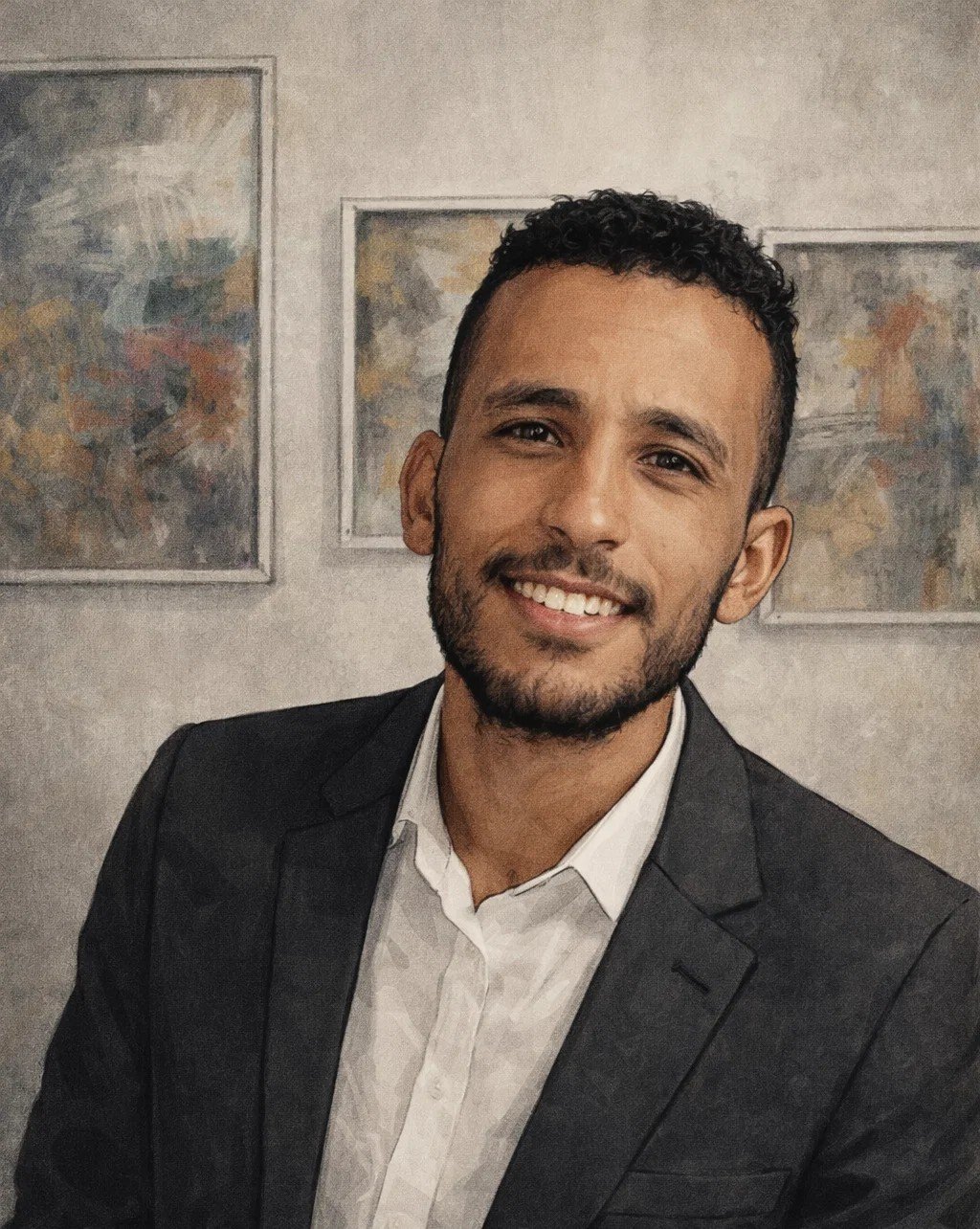
Ali Al-Muqri is a distinguished Yemeni novelist with exceptional narrative skills, in which social issues intersect with unforeseen events. His writings integrate individual stories within broader social and cultural contexts, allowing readers to gain an understanding of the realities reflected in his literary works.
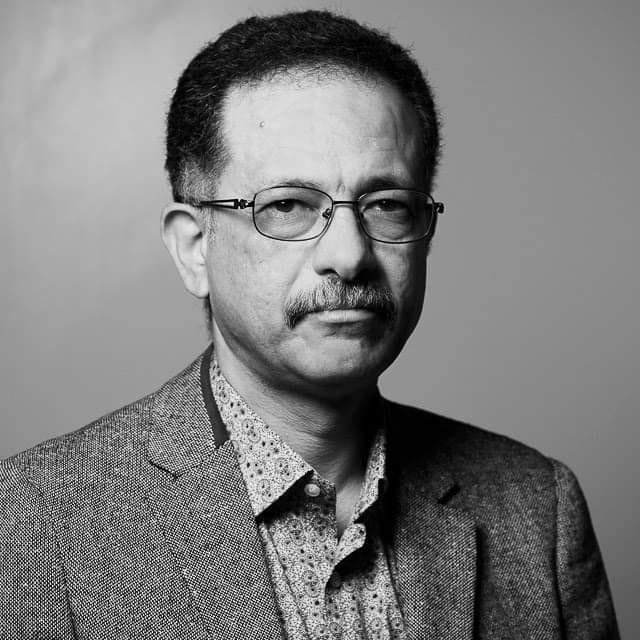
Al-Muqri’s works demonstrate a high level of narrative proficiency, combining elements of fiction and reality to reflect contemporary social and cultural issues. The characters in his novels are portrayed with vitality and provide an accurate representation of the human psyche, raising existential questions about the meaning of life and humanity.
Al-Muqri’s writing style is characterized by complexity and depth, using language as a tool to embody emotions and ideas, thereby constructing literary worlds that reflect real-life challenges and contradictions. Each of his works serves as a study of the psychological, spiritual, and physical dimensions of human experience, making the reading of his works a comprehensive intellectual experience.
Ali Al-Muqri’s contributions to Arabic literature are significant, successfully combining linguistic precision with the ability to convey literary and social messages clearly. This approach leaves a marked impact on the development of contemporary Arabic literature, establishing his works as essential references for scholars and researchers in the field of literary narrative.
Through your narrative experiences in which you explored forms of coexistence, whether in "The Current Jew," "Adeni Incense," or "Black Taste... Black Scent," what ideas can Ali Al-Muqri offer as guidance toward a roadmap for peace and coexistence in Yemen?
I do not believe that novels provide a ready-made roadmap for peace or solutions to any problems; however, they may raise questions and encourage readers to pursue a different path in their lives, one that avoids fanaticism, the claim of absolute truth, or assuming that one’s perspective is correct while others are wrong.
In this regard, artistic and literary works offer their own vision of the world or their reading of its crises and problems from a unique perspective, one that others—often preoccupied with conflicts and the distortion of anything emanating from others—may not see.
Regarding the creation of a peace roadmap for coexistence in Yemen, I believe that this cannot be achieved without acknowledging the equality of all citizens. Coexistence is impossible in the presence of hierarchical distinctions based on family privilege, sect, or doctrine. Such equality can only be ensured through laws that criminalize abhorrent racial or hereditary discrimination, which Yemenis had already overcome with the September 26, 1962 revolution, declaring that "there is no master but the people." Peace cannot be achieved while individuals consider themselves above the state or the people, nor with a central authority dominating all the country’s resources.
Therefore, any peace roadmap must emphasize the concept of a state founded on equality and democracy, allowing everyone to express themselves and exercise their personal freedoms. It is also essential to establish transitional justice that restores dignity to all those who suffered from racist and repressive dictatorial practices. The word “tolerance” may become meaningless unless it is transformed into legal text and practice that exposes atrocities committed against people and prevents their recurrence in the future.
Personal and Literary Experiences – Through your personal and literary experiences, what are the most effective messages that literature can convey to promote understanding and tolerance among different cultures?
The most important contribution of literature is that it should be written freely and without ideological or political direction. Understanding and tolerance are core values of literature, but literature loses these qualities when they are guided by an ideological or political institution, turning it into a temporary propaganda slogan that attracts fleeting attention. Many novels and artistic works have influenced significant social and political trajectories in history, but they did so through the personal motivation of the writer or artist and nothing else.
Characters and Coexistence – How do you select or create characters that convey the concept of coexistence in your novels?
As I mentioned, literary writing is not subject to predetermined constraints, whether legal or otherwise. Such concepts can turn a novel into a vehicle or expositor of established ideas that may conflict with the literary focus, which should be the writer’s sole preoccupation. From this perspective, I believe the characters in my novels have explored the complexities of coexistence without engaging in propaganda by explicitly advocating it.
You have addressed Yemeni history in most of your novels; how can reading history contribute to improving the lived political reality?
I have not written historical novels, and when I have returned to certain periods, it has been for literary purposes related to the context of the issues explored in the text.
I believe that reading history in itself can inspire many to overcome some contemporary challenges, including stories of conflicts, wars, and oppression—stories that, unfortunately, are often recycled.
The Future of Literature in Promoting Peace – How do you see the future of literature in reinforcing the values of peace and coexistence in society? Are there new trends in literature that support these values?
Certainly, there are many significant literary works that have helped people question their relationships with others, or with those who differ from them in belief, race, or gender. I believe these issues remain open to exploration from various perspectives, in addition to the primary concern that literature often addresses: the issue of freedom, from which all other issues branch out.